· Expert Exhaust Cleaning · Compliance · 5 min read
AS/NZS 1668.1 vs AS 1851: What’s the Difference for Your Kitchen?
AS/NZS 1668.1 governs how your kitchen ventilation is designed and built; AS 1851 governs how it’s serviced and cleaned once it’s running.
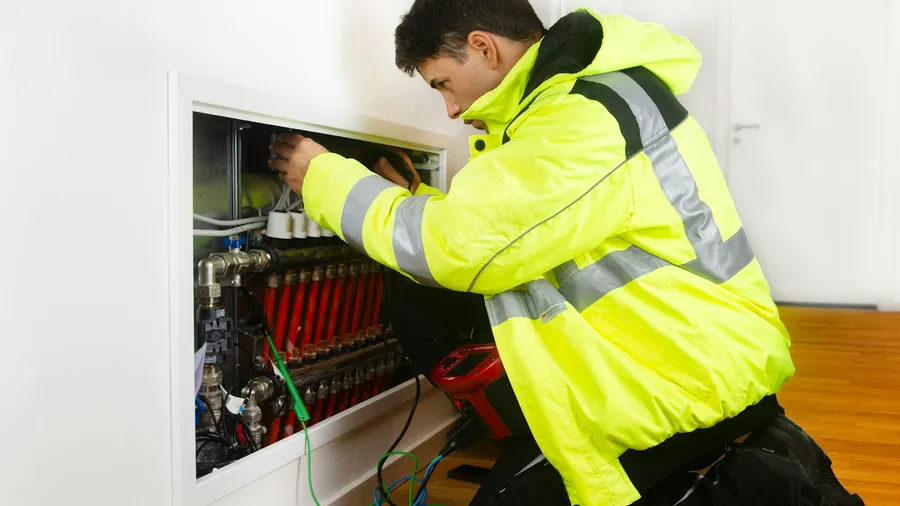
AS/NZS 1668.1 and AS 1851 are two different Australian Standards that apply at two different stages of your kitchen exhaust system’s life. AS/NZS 1668.1 is a design standard — it sets how mechanical ventilation is engineered, sized and installed. AS 1851 is a maintenance standard — it sets how that system is routinely serviced, inspected and cleaned to stay fire-safe. In short: one gets your exhaust built correctly, the other keeps it compliant for the years you operate.
What is the difference between AS/NZS 1668.1 vs AS 1851?
AS/NZS 1668.1 is the design and installation standard for mechanical ventilation, while AS 1851 is the routine-service standard for fire protection systems and equipment. You interact with AS/NZS 1668.1 once — at fit-out or major refurbishment — because it dictates airflow rates, duct construction and fire-mode operation. You interact with AS 1851 continuously, because it governs the ongoing cleaning and inspection records your insurer, landlord and council want to see.
The distinction matters because passing one does not satisfy the other. A perfectly designed canopy still fails compliance if it is never cleaned, and a spotless duct is still non-conforming if it was built with no access panels.
| Feature | AS/NZS 1668.1 | AS 1851 |
|---|---|---|
| Purpose | Design of mechanical ventilation | Routine service of fire protection systems |
| Stage of life | Installation / refurbishment | Ongoing operation |
| Who acts on it | Mechanical engineer, ductwork installer | Exhaust cleaning technician, facility manager |
| Sets airflow & capture velocity | Yes | No |
| Sets cleaning frequency & records | No | Yes |
| Requires access panels | Yes (specifies them) | Yes (uses them to clean) |
| Referenced by insurers | Rarely | Frequently |
| How often it applies to you | Once | Every 3–6 months |
What does AS/NZS 1668.1 actually cover?
AS/NZS 1668.1 covers the mechanical design of your ventilation — airflow volumes, duct materials, fire dampers and fire-mode fan operation — because a poorly designed system cannot capture grease-laden vapour no matter how often it is cleaned. It specifies capture and containment performance so cooking effluent is drawn into the canopy rather than escaping into the kitchen.
Critically, AS/NZS 1668.1 requires adequate access panels along the duct run. This matters for cleaning because grease accumulates on internal duct surfaces you cannot reach without them.
- Airflow and capture velocity → ensures grease and smoke enter the exhaust instead of settling on surfaces.
- Duct construction and sealing → contains a fire and stops grease leaking into cavities.
- Fire dampers and fire-mode operation → isolates the ventilation path if a fire starts.
- Access panel provision → makes the whole system cleanable, which is what AS 1851 later relies on.
What does AS 1851 actually cover?
AS 1851 covers the routine service, inspection and cleaning of fire protection systems, and commercial kitchen exhaust systems fall within its scope. It is the standard that translates “clean your exhaust” into evidence: dated certificates, grease-depth measurements, before-and-after photos and a next-service date.
AS 1851 exists because grease build-up is the leading cause of commercial kitchen fires. Removing that grease removes the primary ignition fuel, which is why documented cleaning is a fire-safety control, not housekeeping. This is the core of our compliance & safety cleaning work.
How often does AS 1851 require kitchen exhaust cleaning?
Most commercial kitchens need exhaust cleaning every 3–6 months, with higher-output kitchens cleaned far more often. The interval is driven by cooking type and volume, because grease deposits faster where there is more heat, oil and throughput.
| Kitchen type | Filters | Duct & canopy internals |
|---|---|---|
| Café / light cooking | Weekly | Every 6 months |
| Standard restaurant | Weekly | Every 3–6 months |
| Charcoal / wok / high-volume frying | Monthly | Quarterly |
Charcoal grills, wok stations and high-volume frying demand monthly filter cleaning and quarterly duct cleaning because they generate dense, sticky grease that coats internal surfaces quickly. Leaving that grease in place raises fire risk directly, since it is the fuel a spark needs.
Which standard do inspectors and insurers ask about?
Insurers and inspectors almost always ask about AS 1851, because they care about whether your operating system is being serviced and documented. They rarely ask to see AS/NZS 1668.1 conformance unless the system is new or was recently modified.
That said, the two connect. If AS/NZS 1668.1 was ignored at fit-out and your duct has no access panels, you physically cannot meet AS 1851 cleaning — a gap that surfaces during a claim or audit. We cover this overlap in our guide to exhaust cleaning and your insurance policy.
What does compliant cleaning cost in Sydney?
Compliant cleaning in Sydney starts at around $390 for a single-canopy clean and scales with the size and complexity of the ductwork. Pricing tracks the labour and access required, because longer duct runs and multiple levels take more time to clean and document.
| Scope | Indicative cost (AUD) |
|---|---|
| Single-canopy clean | from ~$390 |
| Canopy + duct clean | $900 – $2,500 |
| Multi-storey duct system | $3,000+ |
Every clean should return a compliance certificate and photos, because without records you cannot prove AS 1851 servicing to an insurer or council. If you are preparing for an inspection, read how to pass a council kitchen exhaust inspection.
AS/NZS 1668.1 vs AS 1851: which one do you need?
You need both, at different times. AS/NZS 1668.1 is satisfied when your system is designed and installed correctly, so it is mainly a fit-out concern. AS 1851 is satisfied through an ongoing cleaning schedule with proper documentation, so it is your day-to-day compliance obligation.
For an operating Sydney kitchen, AS 1851 is the standard you actively manage — book cleaning every 3–6 months, keep the certificates, and confirm your duct has the access panels AS/NZS 1668.1 required in the first place.
Not sure which standard your last clean actually met, or when your duct was last opened? Call Expert Exhaust Cleaning on 0468 070 392 or get a same-day quote and we will assess your system, clean it to AS 1851 and give you the documentation your insurer and council expect.