· Expert Exhaust Cleaning · Fire Safety · 4 min read
Why Grease Build-Up Is the Leading Cause of Commercial Kitchen Fires
How grease moves through an exhaust system, where it ignites, and the four checks that reduce the risk most for the least money.
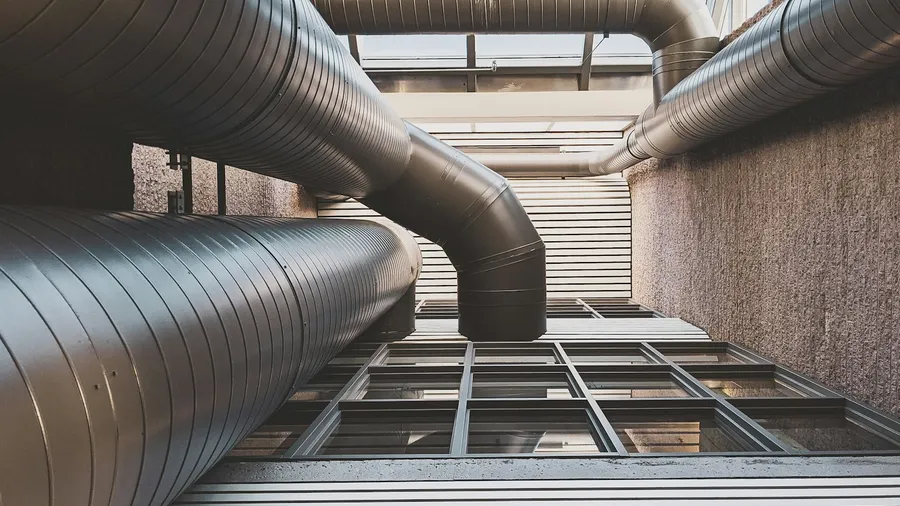
Grease build-up in kitchen exhaust systems is the leading cause of commercial kitchen fires. The mechanism is simple: cooking vapour condenses into a combustible film through the canopy, duct and fan, and that film sits directly above an open flame with a continuous airflow feeding it.
How grease gets into the system
Cooking does not just produce smoke. It aerosolises fat, which travels up into the canopy as vapour and condenses on the first cool surface it meets. That surface is the filter — and once the filter is saturated, everything past it becomes the next surface.
The progression is predictable:
- Filters saturate first. A baffle filter is designed to arrest grease by forcing airflow through sharp direction changes. Once loaded, it stops arresting and starts holding.
- The plenum loads next. The cavity behind the filters accumulates a soft layer that hardens over time.
- The duct run collects along its length. Horizontal runs and bends collect fastest; grease pools at low points.
- The fan is last and worst. The impeller loads unevenly and the motor generates its own heat right beside the deposit.
Where it ignites
Almost always at the canopy. A flare-up on the cooktop — a fryer boilover, a flambé, a gas burner running high under an empty pan — reaches a saturated filter, and the filter becomes fuel rather than a barrier.
Why it spreads
This is the part operators underestimate. Once ignited at the canopy, a grease-lined duct is a continuous fuel path running through the ceiling void and up the riser. The fire is now inside the building fabric, travelling toward the roof, in a space with no detection and no suppression.
Duct cleaning intervals exist specifically to break that fuel path. A clean duct means a canopy fire stays a canopy fire.
The secondary risks
- Airflow loss. A 3 mm grease lining through a 300 mm duct removes measurable cross-section and adds friction. Extraction drops and the kitchen runs hotter — which is itself a risk factor.
- Motor overheating. A loaded impeller makes the motor work harder. A hotter motor sits next to accumulated grease, in Sydney’s western suburbs on 45°C afternoons.
- Bearing failure. Grease loads unevenly onto blades. The resulting imbalance vibrates the shaft, and vibration destroys bearings and belts.
Four checks worth doing this week
- Pull one filter and look at the back. If you cannot see clean metal through the baffles, the filter is saturated regardless of how the front looks.
- Check the grease gutters and collection cups. Overflowing cups mean the canopy is passing more than it is catching.
- Look for access panels along the duct. If there are none, no contractor has cleaned that run — they have cleaned around it.
- Stand under the canopy during service. If smoke is escaping the capture area, extraction has already degraded.
What actually reduces the risk
In order of cost-effectiveness:
- Frequent filter cleaning. The cheapest single intervention. Filters are the ignition point.
- Duct cleaning at a load-appropriate interval. Breaks the fuel path for fire spread. Every 3–6 months for most kitchens.
- Fan cleaning aligned to the duct cycle. Removes fuel from the one component generating its own heat.
- Documentation. Does not reduce the fire itself, but determines whether your insurer pays for it.
The compliance layer
AS 1851 sets service intervals based on cooking load and observed accumulation, and AS/NZS 1668.1 governs how the system was designed. Cleaning documented to AS 1851 gives you two things at once: a lower fire load, and the evidence your insurer will ask for if you ever need to make a claim.
Read more on duct cleaning and exhaust fan cleaning, or get a same-day quote.
Where grease builds up fastest
Grease accumulates unevenly through the system, which is why interval and priority differ by component.
| System part | Grease risk | Why it matters |
|---|---|---|
| Filters | Highest | The ignition point directly above the flame |
| Canopy plenum | High | Holds a hardening layer behind the filters |
| Duct run | Continuous | The fuel path that carries fire through the building |
| Exhaust fan | Concentrated | The one component that generates its own heat |