· Expert Exhaust Cleaning · Duct Cleaning · 6 min read
Signs Your Kitchen Exhaust Duct Is a Fire Risk
The warning signs are cheap to spot and expensive to ignore — here is how to tell when your kitchen exhaust duct has quietly become a fire risk.
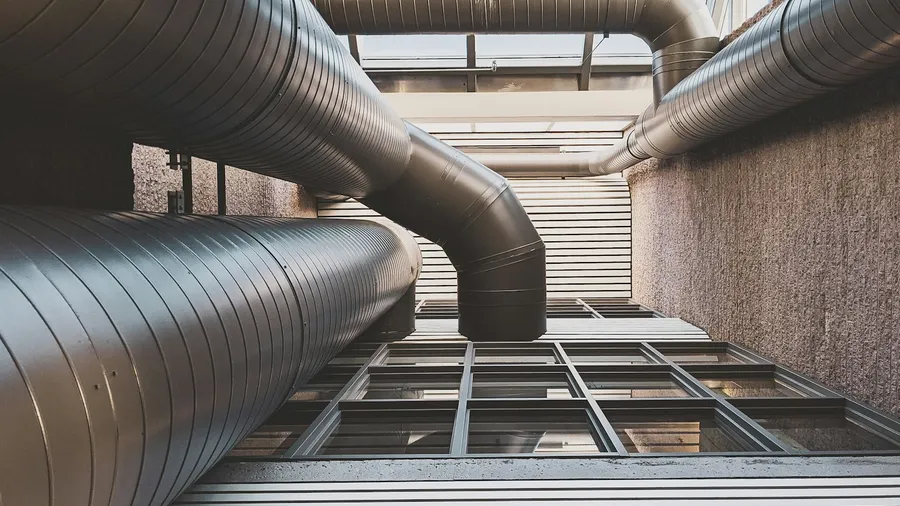
Your kitchen exhaust duct becomes a fire risk when grease coats the duct walls, filters overflow onto the cookline, extraction weakens, or the system has no cleaning record in the last six months. Grease build-up is the leading cause of commercial kitchen fires, and a layer only a few millimetres thick will carry flame through the ductwork into the roof space. The clearest kitchen exhaust duct fire risk signs are visible, smellable, and audible — if you can detect grease, the hazard is already live, not hypothetical.
Grease does not stay at the canopy. Hot oil vapour rises, cools along the duct, and hardens into a fuel lining that a flare-up or an overheating fan can ignite. Below are the signs that the duct has crossed from dirty into dangerous.
What are the warning signs of a kitchen exhaust duct fire risk?
The main warning signs are visible grease at the filters and duct openings, weak extraction, lingering smoke, a rancid odour, a straining fan, and a missing or overdue service certificate. Each one points to grease sitting where it can burn. The table below ranks them by how directly they signal fire danger.
| Sign | What it means | Fire risk |
|---|---|---|
| Grease dripping from filters or canopy | Filters are saturated and grease is running back over open flame | High |
| Weak extraction, smoke hanging in the kitchen | Grease has narrowed the duct bore and choked airflow | High |
| Fan louder, vibrating, or straining | A grease-loaded impeller runs hot and can become an ignition source | High |
| Rancid or oily smell when the system runs | Old grease is oxidising inside the duct instead of venting | Medium |
| Sticky, discoloured surfaces near the hood | Aerosolised grease is escaping the capture zone | Medium |
| No clean or certificate in the last 6 months | Grease depth is unknown and likely past a safe threshold | High |
Any single high-risk sign justifies an inspection now, because grease keeps accumulating regardless of the calendar.
Why is visible grease the most urgent sign?
Visible grease is the most urgent sign because it is fuel sitting directly above a heat source. Once filters saturate, grease stops draining into the collection tray and instead coats the canopy face, the plenum, and the first metres of duct — the exact zone a flare-up reaches. Removing that grease removes the primary ignition fuel, which is the single most effective way to cut fire risk.
Does weak airflow point to a fire risk?
Yes. When smoke lingers or the kitchen feels hotter and steamier than usual, grease has restricted the duct and the fan is moving far less air than designed. That matters twice: heat and grease-laden vapour now dwell inside the duct longer, and the system no longer meets the extraction rate set under AS/NZS 1668.1 mechanical ventilation design.
What does a straining exhaust fan tell you?
A louder or vibrating fan means grease has loaded the impeller and thrown it out of balance. The motor then draws more current and runs hotter, so the fan itself can become an ignition source at the top of the duct — the worst possible place for a fire to start. Cleaning the fan and cowl rebalances the assembly and cuts that heat.
How much grease build-up makes a duct dangerous?
A grease layer of roughly 2 mm or more is widely treated as the point where a duct will sustain and spread fire, which is why inspection measures depth rather than guessing. Once grease lines a continuous duct run it becomes a fuse from the cookline to the roof, so regular cleaning keeps the deposit below that threshold.
The problem compounds with time. Thin grease wipes off quickly, but a baked-on layer needs scraping and heated soaking — so a duct left too long is both more dangerous and more expensive to make safe.
What do AS 1851 and AS/NZS 1668.1 require?
AS 1851 covers the routine service of fire protection systems and expects kitchen exhaust cleaning to be inspected, dated, and certified on a schedule matched to grease accumulation. AS/NZS 1668.1 governs the mechanical ventilation design — duct sizing, access panels, and airflow — that makes a system cleanable and lets it extract heat safely in the first place.
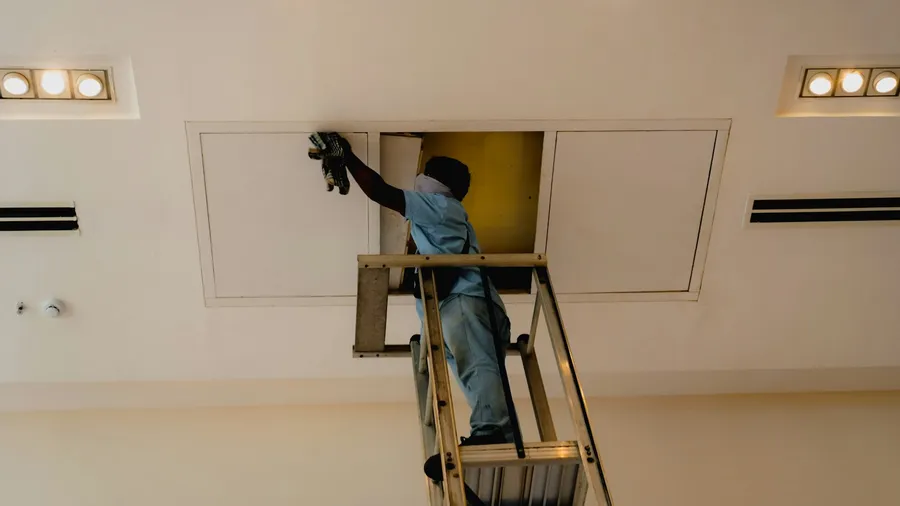
Neither standard names a single universal interval; both require a schedule verified by inspection. In practice that means inspecting at least every six months and cleaning whenever grease reaches a measurable depth. Proper access panels are essential to comply, because a technician cannot verify or clean a duct they cannot reach — a point we cover in our guide to exhaust duct access panels and AS 1851.
How often should you clean to remove the fire risk?
Most commercial kitchens need duct cleaning every 3 to 6 months, while charcoal, wok, and high-volume frying kitchens need monthly filter cleaning and quarterly duct cleaning. The interval scales with grease load, so match it to how you actually cook rather than to a generic annual clean.
| Kitchen type | Filters | Duct | Why |
|---|---|---|---|
| Charcoal, wok, heavy frying | Monthly | Quarterly | Aerosolises the most oil and carbon, so grease loads 3–4× faster |
| Busy restaurant, pub, bistro | Monthly | Every 6 months | Steady frying and grilling deposit grease at a moderate rate |
| Café, light or reheat-only | Monthly | Every 6–12 months | Low grease output keeps the duct below a hazardous depth longer |
These intervals reduce fire risk because they strip grease before it reaches an ignitable thickness, and they keep airflow strong so heat and smoke leave the kitchen. Professional duct cleaning opens the full run, brushes it back to metal, and certifies the result. For a fuller breakdown, see how often commercial ducts need cleaning in Sydney.
What does duct cleaning cost in Sydney?
A single-canopy clean in Sydney starts from around $390, a full canopy-and-duct clean typically runs $900 to $2,500, and a multi-storey riser starts at $3,000 and up. Price is driven by duct length, number of access points, roof access, and grease load — which is exactly why a shorter interval keeps each visit cheaper.
| Scope | Typical price (AUD) |
|---|---|
| Single canopy, filters and plenum | from ~$390 |
| Canopy plus duct and fan | $900–$2,500 |
| Multi-storey riser and roof plant | $3,000+ |
Letting grease accumulate does not save money — it makes every clean harder and more expensive, while carrying a live fire risk in between.
Act before the next flare-up
If your duct shows even one high-risk sign, treat it as due for cleaning today rather than next quarter. Call Expert Exhaust Cleaning on 0468 070 392 or get a same-day quote, and we will measure your grease depth, clean back to compliant metal, and leave you with an AS 1851 certificate before we go.