· Expert Exhaust Cleaning · Duct Cleaning · 5 min read
Kitchen Exhaust Duct Access Panels: What AS 1851 Requires
Access panels are the difference between a duct that can be cleaned and certified and one that can not — here is what AS 1851 expects.
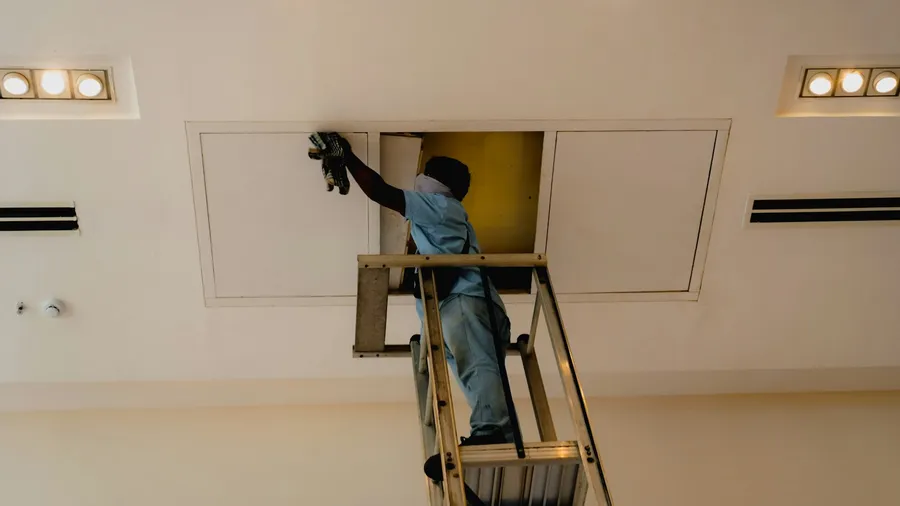
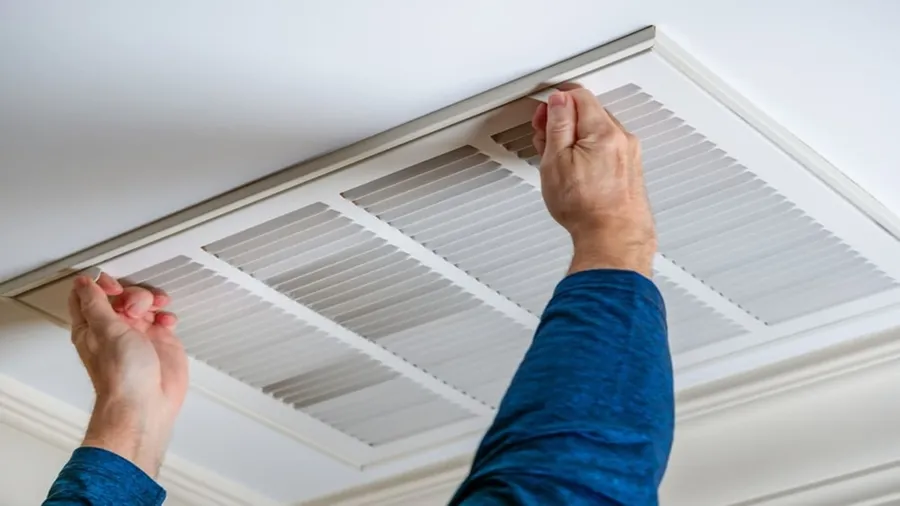
Duct access panels are the removable, sealed openings that let a technician reach, clean and inspect the inside of a kitchen exhaust duct. Under duct access panels AS 1851 guidance, every section of the run must be reachable through a panel — because a duct length that can not be reached can not be cleaned, measured or certified. Missing or painted-over panels are the single most common reason a Sydney exhaust system fails an insurance or audit check.
What does AS 1851 say about duct access panels?
AS 1851 is the Australian Standard for the routine service of fire protection systems, and kitchen exhaust ductwork sits within its scope. It requires that the full internal surface of the duct be accessible for inspection and cleaning, which in practice means fitted access panels at regular intervals along the run.
The standard drives the requirement because grease coats the inside of the duct, not just the canopy. If a two-metre section between bends has no panel, that grease stays put, keeps building and remains the fuel any duct fire needs to spread.
Where do access panels need to be positioned?
Panels are needed wherever grease collects or a technician can not otherwise reach — at each change of direction, either side of the fan, and along any straight run too long to clean end to end. AS/NZS 1668.1, the standard for mechanical ventilation design, is where these spacing and sizing expectations originate at the design stage.
A useful working rule for Sydney installs is a panel at every bend plus one roughly every 3 metres of straight horizontal duct. Vertical risers need panels top and bottom so the full column can be cleaned and drained.
| Location | Why a panel is required |
|---|---|
| Every bend or elbow | Grease pools where airflow changes direction, increasing ignition fuel |
| Each ~3 m of straight run | Cleaning tools and inspection can not reach beyond that span |
| Both sides of the exhaust fan | Grease drains back into a clean run if the fan zone is skipped |
| Top and bottom of vertical risers | Allows the full column to be cleaned and grease to be drained out |
What makes an access panel compliant?
A compliant panel is grease-tight, removable without cutting the duct, and correctly sized so a technician can actually clean through it. It must reseal to the same standard as the surrounding duct so vapour and grease can not leak into the ceiling void or wall cavity.
Panels should be labelled or mapped so each one is opened at service — an unopened panel produces no before-and-after evidence for that section. Screwed or cam-lock frames with a heat-rated gasket are standard, because tape-sealed cut-outs fail and leak grease over time.
How big should a duct access panel be?
Large enough for a hand, an arm and a cleaning tool to work the internal surface — a common practical minimum is around 300 x 300 mm on larger ducts, scaled down for smaller ones. Undersized panels are technically present but useless, since the technician can not reach the far corners to remove grease.
The reason size matters is simple: an opening you can see through but not clean through still leaves an ignition source in place. Access exists to enable cleaning, not just visual inspection.
Why do access panels matter for fire risk?
Because grease build-up inside the duct is the leading cause of commercial kitchen fires, and panels are what let you remove it. Every panel is a point where a technician clears the flammable coating and records how much was there, turning your cleaning interval into an evidence-based decision rather than a guess.
Skipping a section leaves a hidden fuel load exactly where a fire would travel fastest. During a proper duct cleaning, each panel is opened, the run behind it is scraped and degreased, and grease depth is measured before and after.
How often should ducts with access panels be cleaned?
Most commercial kitchens need exhaust duct cleaning every 3 to 6 months, because that is how long it takes grease to reach a depth that raises fire risk. High-output sites — charcoal grills, wok stations and high-volume frying — need filters cleaned monthly and ducts cleaned quarterly, since they deposit grease far faster.
| Kitchen type | Filter cleaning | Duct cleaning | Reason |
|---|---|---|---|
| Cafe, light cooking | Monthly | Every 6 months | Lower grease output extends the safe interval |
| Standard restaurant | Fortnightly to monthly | Every 3–6 months | Moderate grease load needs mid-range servicing |
| Charcoal / wok / heavy frying | Monthly (or more) | Quarterly | Heavy grease deposits raise fire risk quickly |
Access panels make these intervals achievable — without them, quarterly cleaning of an internal run is physically impossible. For a fuller breakdown, see how often commercial kitchens need duct cleaning in Sydney.
What does adding access panels cost in Sydney?
Retrofitting panels is usually folded into a full clean rather than billed alone. A single-canopy clean starts from around $390, a combined canopy-and-duct clean runs $900 to $2,500 depending on run length and grease load, and multi-storey riser systems start at $3,000+.
The variation comes down to how much duct there is, how many panels are missing and how heavy the grease is. If your duct has never been opened, expect a first visit that fits panels where the run can not currently be reached, then cleans and certifies it — the process covered in what happens during a commercial duct clean.
Book a compliant duct clean
If your exhaust duct has sections nobody can reach, it can not be certified — and that gap shows up at your next audit or policy renewal. Call 0468 070 392 or get a same-day quote and we will map your access points, fit panels where the run needs them and clean the full system to AS 1851. Sort the access first, and every clean after it becomes faster, cheaper and provable.