· Expert Exhaust Cleaning · Duct Cleaning · 5 min read
What Happens During a Commercial Duct Clean, Step by Step
A step-by-step walkthrough of a commercial duct clean in Sydney, from inspection and isolation to fan cleaning, verification, and your AS 1851 compliance report.
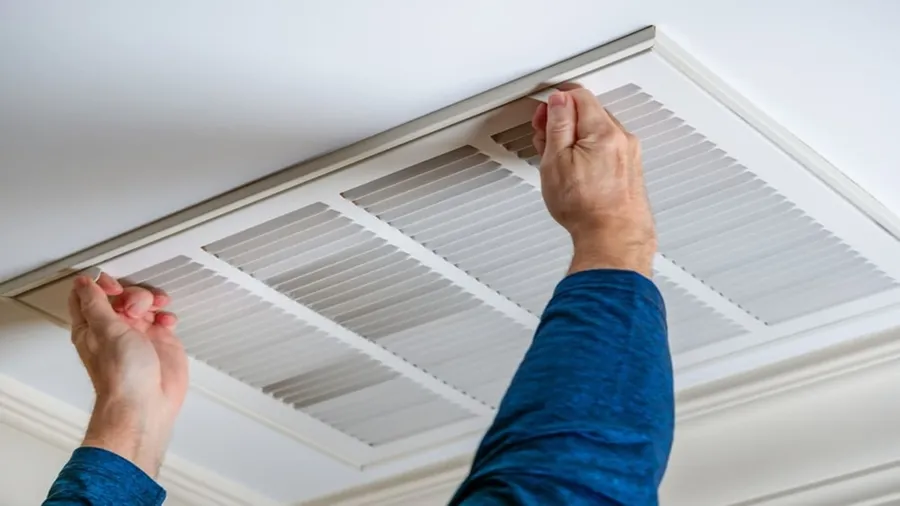
A commercial duct clean removes grease from the entire exhaust path — filters, canopy, plenum, ductwork, and exhaust fan — then verifies the result and documents it. A technician inspects the system, isolates and protects the site, scrapes and degreases every surface back to bare metal, then issues an AS 1851 compliance report with before-and-after evidence. The full commercial duct cleaning process usually takes 3 to 8 hours and runs after trading hours to avoid disrupting service.
Knowing what each stage involves helps you judge whether a clean was done properly — a wiped canopy with a greasy duct behind it is not a clean, and it will not hold up to an insurance inspection.
What is the commercial duct cleaning process, step by step?
The commercial duct cleaning process follows six stages, from inspection to sign-off. Each stage exists to remove grease — the leading cause of commercial kitchen fires — from a different part of the system, because grease left anywhere in the path remains a live ignition fuel.
| Step | Stage | What it achieves |
|---|---|---|
| 1 | Inspection and risk assessment | Maps grease load and access points before work starts |
| 2 | Isolation and site protection | Makes the system safe and protects the kitchen |
| 3 | Filter and canopy cleaning | Removes the heaviest grease at the source |
| 4 | Duct and plenum cleaning | Clears the hidden run where fires spread |
| 5 | Exhaust fan and roof unit | Restores extraction and removes pooled grease |
| 6 | Verification and reporting | Proves the clean for insurers and AS 1851 |
Every stage below elaborates on one of these steps.
Step 1: How does a technician inspect the system first?
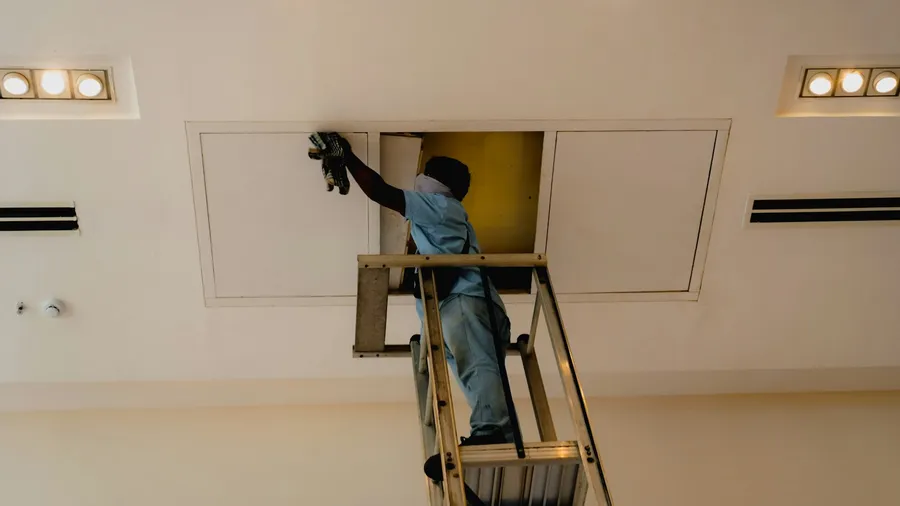
The technician opens the canopy, filters, and access panels to measure grease depth and locate every section of duct. This maps the job before any cleaning starts, so nothing is missed and the crew knows where the hidden risk sits.
Access is the deciding factor here. Systems built to AS/NZS 1668.1 mechanical ventilation design have access panels at each bend and rise, which is what makes the full run reachable — without them, sections stay uncleaned and non-compliant.
Step 2: How is the system isolated and the kitchen protected?
The exhaust fan and appliances are switched off and locked out, and the surrounding area is masked with plastic sheeting and drop mats. This prevents grease, water, and degreaser from spreading across cooking surfaces, and stops the fan starting mid-clean.
Isolation is a safety step, not a formality — a fan energising while a technician is in the duct is a serious hazard. Protecting the kitchen also keeps your food-prep surfaces clean, so you can trade the next morning without re-sanitising the line.
Step 3: How are the filters, canopy and plenum cleaned?
Baffle filters are removed and soaked in a hot caustic tank, while the canopy and plenum are hand-scraped and degreased back to bare metal. This clears the heaviest grease first, because the canopy and filters catch the most vapour and are the fastest to foul.
Soak-tank degreasing lifts baked-on grease that hand-washing leaves behind, which is why it outperforms a dishwasher for heavy filters. The plenum — the chamber above the filters — is scraped by hand because grease pools there and feeds straight into the duct.
Step 4: How is the ductwork itself cleaned?
The horizontal and vertical duct runs are scraped and degreased through the access panels, working section by section until the metal is clean. This is the most important stage, because the duct is the hidden path a grease fire travels through into the roof space.
Long runs and elbows trap the most grease, so they take the longest and need the most panels. Effective cleaning depends entirely on access — this is why proper access panels and AS 1851 matter so much, and why our duct cleaning service checks panel coverage before quoting.
Step 5: What happens to the exhaust fan and roof unit?
The rooftop exhaust fan is opened, the impeller and housing are degreased, and pooled grease at the fan base is removed. A grease-loaded impeller runs unbalanced and extracts poorly, so cleaning it restores airflow and stops grease dripping back down the riser.
The roof unit is often the most neglected part of a system because it is out of sight. Grease that collects here can run down the external wall and into gutters, creating both a fire path and a drainage problem.
Step 6: How is the clean verified and documented?
The technician photographs each cleaned section, records grease depth, and issues a compliance report with a service sticker showing the clean and next-due dates. This is your evidence for insurers and councils, because AS 1851 requires documented routine servicing of fire-protection systems, not just the work itself.
Before-and-after photos matter because most grease sits where you cannot see it. A report without duct and fan images is a warning sign the hidden sections were skipped.
| What you receive | Why it matters |
|---|---|
| Before-and-after photos | Proves the full run was cleaned, not just the canopy |
| Grease-depth record | Sets your correct cleaning interval |
| Service sticker (dates) | Meets AS 1851 record-keeping at a glance |
| Compliance certificate | Protects insurance and satisfies council |
How long does a commercial duct clean take, and what does it cost?
Most cleans take 3 to 8 hours depending on duct length and grease load, and are scheduled after hours so trading is not affected. A single-canopy clean in Sydney starts from around $390, full canopy-and-duct cleans run $900 to $2,500, and multi-storey systems with long risers start from $3,000.
Duration and price both scale with the same factors — duct length, number of access points, and how much grease has built up. This is the practical case for a shorter interval: each clean stays faster and cheaper when grease never reaches an ignitable thickness. Most Sydney kitchens land on a 3 to 6 month cycle, and you can match yours to your cooking style using our guide to how often to clean a commercial duct.
Book a documented commercial duct clean
A proper clean ends with bare-metal ductwork and a compliance report you can hand straight to your insurer. Call Expert Exhaust Cleaning on 0468 070 392 or get a same-day quote to book an after-hours clean that keeps your kitchen fire-safe and compliant with AS 1851.