· Expert Exhaust Cleaning · Exhaust Fans · 7 min read
6 Signs Your Kitchen Exhaust Fan Motor Is About to Fail
Grinding bearings, hot casings and tripping breakers are early exhaust fan motor failure signs — spot them and you replace a bearing, not a whole motor.
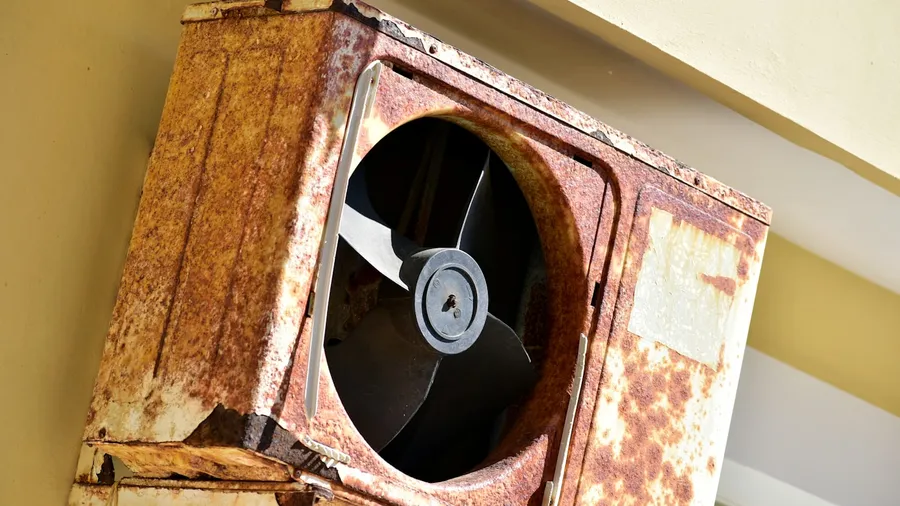
The clearest exhaust fan motor failure signs are grinding or squealing bearings, a casing too hot to touch, breakers that trip on start-up, visible smoke or burning smell, growing vibration, and airflow that drops with the filters clean. Each points to a motor working harder than it should, usually because grease has loaded the impeller or seized the bearings. Catch them early and you replace a $200 bearing instead of a $1,500 motor — and you avoid an unplanned shutdown mid-service.
A rooftop exhaust motor rarely dies without warning. It telegraphs its decline for weeks through noise, heat and lost extraction, and every one of those signals is checkable during a routine clean. This guide covers the six to watch, why each happens, and what to do before the motor stops for good.
What are the warning signs an exhaust fan motor is failing?
The six reliable exhaust fan motor failure signs are abnormal noise, overheating, electrical tripping, smoke or burning odour, excessive vibration, and falling airflow despite clean filters. They appear because a motor near failure draws more current, spins against more resistance, and sheds more heat than a healthy one, and each of those changes shows up as one of these symptoms.
Read them together, not in isolation. Vibration plus noise usually means bearings; heat plus tripping usually means windings or an overloaded impeller. The table below maps each sign to its likely cause and the fix.
| Warning sign | Most likely cause | Typical fix |
|---|---|---|
| Grinding or squealing | Worn or dry bearings | Replace bearings, re-lubricate |
| Motor casing too hot to touch | Grease-loaded impeller, failing windings | Clean impeller, test windings |
| Breaker trips on start-up | Shorted winding, seized bearing | Electrical test, motor service |
| Burning smell or smoke | Insulation breakdown in windings | Stop use, replace motor |
| Rising vibration | Grease-imbalanced or bent impeller | Clean and balance the fan |
| Weak airflow, filters clean | Motor losing torque or speed | Diagnose motor and drive |
Why does grinding or squealing mean the bearings are going?
Grinding or squealing means the fan bearings have lost their lubrication and are wearing metal-on-metal, which is the most common mechanical failure in kitchen exhaust motors. Bearings carry the entire spinning load of the impeller, so once their grease breaks down under heat they roughen, then seize.
The reason it matters is escalation: a dry bearing that squeals this month can seize next month and burn out the motor windings when it stops the shaft dead. Caught at the squeal stage it is a low-cost bearing swap. Left until it grinds, it takes the motor with it, which is why noise is the earliest sign worth acting on.
Why does an exhaust fan motor overheat?
An exhaust fan motor overheats mainly because grease has coated the impeller and housing, forcing the motor to work harder while trapping the heat it produces. A casing too hot to hold your hand on is a motor running well above its design temperature, and sustained heat is what breaks down winding insulation.
Grease drives this because it does two things at once: it adds dead weight and imbalance to the impeller so the motor draws more current, and it insulates the frame so waste heat cannot escape. That is the direct link between dirty extraction and dead motors — the grease starving your airflow is the same grease cooking your windings. Removing it during exhaust fan cleaning lowers both the load and the running temperature.
Why do breakers trip and what does a burning smell mean?
A breaker that trips when the fan starts signals a motor drawing excess current — from a seized bearing, a shorted winding, or an impeller too grease-heavy to spin freely. A burning smell or visible smoke means the winding insulation is already breaking down, and that motor should be shut off immediately.
Treat these two as different stages of the same fault. Nuisance tripping is a warning you can still diagnose and repair; a burning smell is failure in progress, because scorched insulation cannot be cleaned or reset — it must be rewound or replaced. Running a motor past the burning-smell stage risks an electrical fire in a space already loaded with grease, the leading ignition fuel in commercial kitchen fires.
How does grease build-up cause exhaust motor failure?
Grease causes motor failure by unbalancing the impeller and insulating the motor against its own heat, so it runs hotter, vibrates more and wears its bearings faster. A few millimetres of grease across the blades is enough to throw the fan out of balance, and imbalance is what destroys bearings and shakes windings loose over time.
The chain is direct: grease adds mass and imbalance → the motor draws more current and vibrates → bearings and windings wear early → the motor fails. Every link is prevented by keeping the grease path clean. This is also why a fan can pass every electrical test yet still fail early if the impeller is never cleaned — the fault is mechanical load, not wiring.
What Australian Standards cover exhaust fan servicing?
Two standards apply: AS 1851 sets the routine service and record-keeping intervals for kitchen exhaust and fire protection systems, while AS/NZS 1668.1 sets the mechanical ventilation design the fan must keep meeting. A motor that has lost airflow is failing the AS/NZS 1668.1 benchmark, and AS 1851 is the record that proves the servicing was done.
They matter for more than compliance. AS 1851 service intervals are set to keep grease below the level that overloads the motor and feeds a fire, so following them protects the equipment and the certificate at once. After a fire or a claim, insurers and councils read AS 1851 records as proof of maintenance — and undocumented servicing is treated as none.
How often should you service a commercial exhaust fan?
Most commercial kitchens should have the exhaust system cleaned every 3 to 6 months, while charcoal, wok and high-volume frying kitchens need monthly filter cleaning and quarterly duct and fan cleaning. The interval tracks grease output, because grease is what loads the motor and fuels a fire.
| Kitchen type | Filter cleaning | Fan & duct cleaning |
|---|---|---|
| Low grease (café, reheat, steam) | Every 3 months | Every 6–12 months |
| General restaurant or pub grill | Monthly to quarterly | Every 3–6 months |
| Charcoal, wok, high-volume frying | Monthly | Quarterly |
Keeping to schedule holds the impeller clean and balanced, which keeps bearing wear, vibration and running temperature low — the three things that kill motors. For the full breakdown, see how often to service a commercial exhaust fan. If the fan already runs but will not clear smoke, the cause is often the same grease load, covered in why a commercial exhaust fan is not pulling air.
What does exhaust fan servicing cost in Sydney?
Servicing that cleans and checks the fan starts from about $390 for a single-canopy clean, runs $900–$2,500 for a combined canopy-and-duct clean, and $3,000+ for multi-storey riser systems. Cost scales with grease load and roof access, because a heavier deposit takes more labour to clear the impeller back to bare metal.
Set against a motor replacement — parts and rooftop labour that routinely run past $1,500 before the lost trading hours — routine cleaning is the cheaper path by a wide margin. Each clean also inspects the bearings, casing temperature and vibration, so a failing motor is flagged while it is still a repair rather than a replacement.
Book a check before the motor stops mid-service
If your fan is grinding, running hot or tripping the breaker, have it checked now — those are the signs that turn a cheap bearing swap into a motor replacement and an emergency shutdown. Call 0468 070 392 or get a same-day quote, and we will clean, inspect and diagnose the fan before it fails on you.