· Expert Exhaust Cleaning · Exhaust Fans · 6 min read
Rooftop Exhaust Fan Maintenance for Sydney Kitchens
Rooftop exhaust fans sit above the whole grease path, so neglecting them starves airflow and stockpiles the fuel that drives most commercial kitchen fires.
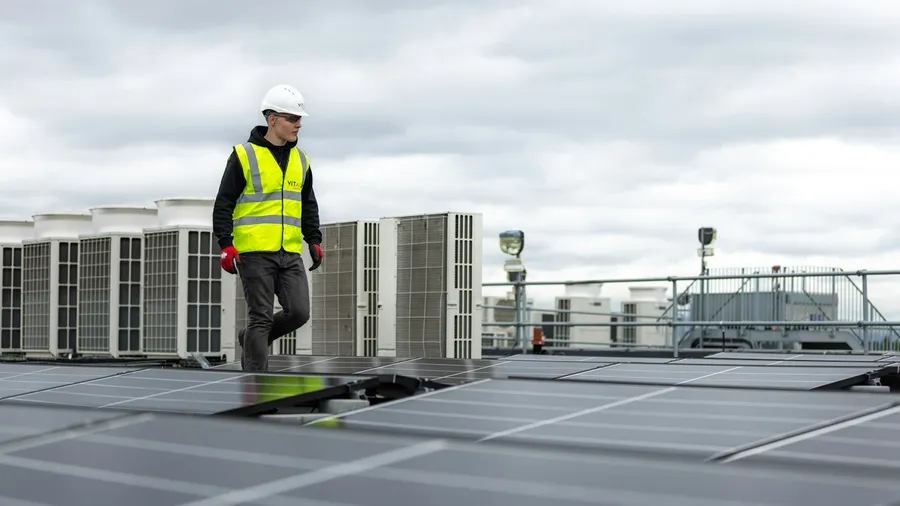
Rooftop exhaust fan maintenance in Sydney means degreasing the fan, hinging it back on its curb to clean the discharge, and clearing the vertical duct behind it — on a schedule set by how hard the kitchen cooks. The rooftop fan sits at the top of the grease path, so every deposit the canopy misses ends up here, unbalancing the impeller and blocking the outlet. Skipping it lets grease drain back down the duct, cutting airflow and building the fuel load that causes most commercial kitchen fires.
The fan on your roof is the hardest part of the system to reach and the easiest to forget, which is exactly why it fails first. This guide covers what maintenance involves, how often it is due, and what it costs across Sydney.
What does rooftop exhaust fan maintenance in Sydney involve?
Rooftop exhaust fan maintenance in Sydney involves safely accessing the roof, isolating power, hinging or lifting the fan off its curb, degreasing the impeller, housing and discharge, then inspecting the belt, bearings and motor before refitting. Each step targets a different failure, so a real service is more than a wipe-down of the cowl.
The work matters because grease reaches the fan as vapour, condenses on the cold impeller, and hardens into an uneven coating. That coating unbalances the wheel, which vibrates the bearings loose and forces the motor to draw more current. Cleaning back to bare metal rebalances the fan, so it moves its rated air on the same motor.
| Maintenance task | What it targets | Why it matters |
|---|---|---|
| Roof access and power isolation | Technician safety | Prevents falls and live-motor contact |
| Hinge fan off the curb | Discharge and plenum top | Clears grease that drains back down the duct |
| Degrease impeller and housing | Fan balance | Restores airflow, cuts vibration and power draw |
| Inspect belt and bearings | Mechanical wear | Catches slip and seizure before failure |
| Clear cowl and weather flaps | Discharge path | Stops birds, nests and grease blocking outflow |
| Photograph and certify | AS 1851 records | Proves compliance for insurer and council |
Why do rooftop fans need more maintenance than the rest of the system?
Rooftop fans need closer attention because they collect grease from the entire duct run below them while being the least accessible component to check. Everything the filters and canopy fail to catch travels up and settles on the fan, so it carries the heaviest hidden load in the system.
Weather compounds it. Sun bakes the grease into a hard varnish, rain washes diluted grease back down the duct, and wind carries leaves and nesting material into the cowl. A neglected rooftop fan therefore blocks its own discharge from two directions at once — fouled internally by grease and externally by debris.
How often should a rooftop exhaust fan be serviced?
Most Sydney commercial kitchens should have the rooftop fan serviced every 3 to 6 months, aligned with the full exhaust clean, while charcoal, wok and high-volume frying kitchens need quarterly fan and duct attention plus monthly filter cleaning. Frequency tracks grease output, because grease is both what unbalances the fan and what feeds a fire.
The interval is not arbitrary — it is the point where grease depth starts to sharply raise vibration and fire risk together. Waiting for a symptom means the fan has already lost airflow and stockpiled fuel.
| Kitchen type | Fan and duct service | Filter cleaning |
|---|---|---|
| Low grease (café, reheat, steam) | Every 6 months | Every 3 months |
| General restaurant or pub grill | Every 3 to 6 months | Monthly to quarterly |
| Charcoal, wok, high-volume frying | Quarterly | Monthly |
For the full logic behind these intervals, see how often to service a commercial exhaust fan.
What are the signs a rooftop exhaust fan needs maintenance?
The clearest signs are a fan that vibrates or howls, smoke that lingers over the cooktop, and grease staining the roof around the curb. Each points to grease load: vibration means an unbalanced impeller, weak extraction means a choked discharge, and roof staining means grease is escaping the housing seals.
A rising power bill is an early, quieter warning, because a grease-laden fan draws more current to move less air. If the kitchen stays hot or a tissue no longer holds against the canopy face, the fan on your roof is the first place to look — our guide on a commercial exhaust fan not pulling air works through the diagnosis in order.
What Australian Standards apply to rooftop exhaust fan maintenance?
Two standards apply: AS 1851 sets the routine service and record-keeping requirements for kitchen fire-protection systems, and AS/NZS 1668.1 sets the mechanical ventilation design airflow the fan must deliver. Together they define both the upkeep schedule and the performance target.
AS 1851 matters because insurers and councils treat its documented service records as proof of compliance, and an undocumented clean is treated as no clean after a fire. AS/NZS 1668.1 matters because it fixes the litres-per-second the fan was built to move, so a grease-throttled rooftop fan is failing a design benchmark, not just running tired.
How is a rooftop fan cleaned safely?
Safe rooftop cleaning starts with compliant roof access, edge protection or a harness, and full electrical isolation before anyone touches the fan. Access is the real hazard on this job, so a technician who cuts corners on fall protection is the risk, not the fan.
Once isolated, the fan is hinged back on its curb to expose the discharge and duct top, scraped and degreased to bare metal, then the belt tension, bearing play and motor rotation are checked before refitting. Grease is collected rather than flushed onto the roof, because runoff into stormwater breaches Sydney trade-waste rules and stains the membrane.
What does rooftop exhaust fan maintenance cost in Sydney?
A single-canopy clean including the accessible fan starts from around $390, a combined canopy-and-duct service runs $900 to $2,500, and multi-storey rooftop systems start from $3,000+ because of rope access and rise. Cost scales with access difficulty and grease load, since a high or heavily fouled fan takes more labour and safety equipment.
| Service | Typical Sydney price (AUD) | What it covers |
|---|---|---|
| Single-canopy clean | From ~$390 | Filters, canopy and accessible rooftop fan |
| Canopy + duct clean | $900 to $2,500 | Full vertical duct run to the fan |
| Multi-storey rooftop system | $3,000+ | High-rise riser, rope access, discharge |
A full exhaust fan cleaning covers filters, plenum, duct and rooftop fan in one visit, with before-and-after photos and a compliance certificate for your AS 1851 file. The cost of skipping it is higher — an unbalanced fan burns out its motor early and voids insurance if grease ignites.
Book your rooftop fan service before it fails
If your rooftop fan vibrates, howls or the kitchen will not clear, service it before grease starves the airflow and fuels a canopy fire. Call 0468 070 392 or get a same-day quote, and we will access the roof safely, degrease the fan to bare metal, and certify it for your records.