· Expert Exhaust Cleaning · Exhaust Fans · 5 min read
How Often Should a Commercial Kitchen Exhaust Fan Be Serviced?
Most Sydney kitchens need their exhaust fan serviced every 3 to 6 months, but charcoal and wok venues can’t safely wait that long — here’s how to set yours.
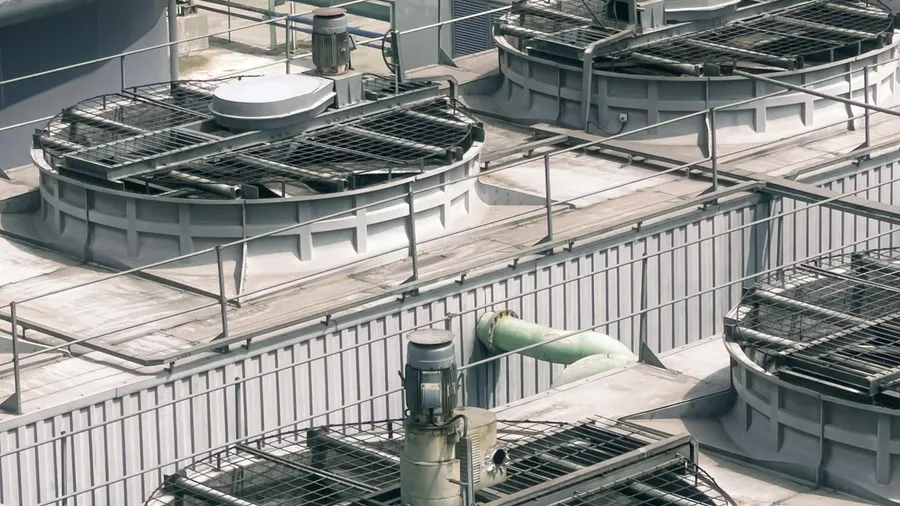
Most commercial kitchen exhaust fans should be serviced every 3 to 6 months, and every 1 to 3 months for charcoal, wok and high-volume frying venues. Servicing is more than a clean — it strips grease from the impeller and housing, then checks the motor, bearings, belt and balance, because a grease-loaded fan runs out of true and either fails or feeds a fire. Correct exhaust fan service frequency is set by cooking load, not by the calendar.
What is the right exhaust fan service frequency?
Most Sydney commercial kitchens should service the exhaust fan every 3 to 6 months, because that is how long a rooftop or inline fan takes to gather enough grease to lose balance and airflow under normal cooking. Solid fuel, charcoal, wok and heavy frying kitchens need servicing every 1 to 3 months, since they throw far more airborne oil past the filters and onto the impeller.
The interval tracks three things: cooking method, daily runtime and duct design. A wok line running twelve hours loads a fan roughly twice as fast as an à la carte restaurant running six, so the same fan on the same roof can need double the attention.
| Kitchen type | Typical load | Fan service interval | Filters |
|---|---|---|---|
| Charcoal, wok or solid fuel | 12+ hrs, high grease | Every 1–3 months | Monthly |
| High-volume frying / fast food | 10–14 hrs, fryer-led | Every 1–3 months | Monthly |
| Restaurant (à la carte) | 6–10 hrs, mixed | Every 3–6 months | Monthly |
| Club or pub bistro | Weekend peaks | Every 3–6 months | Monthly |
| Café / breakfast-led | 4–8 hrs, light | Every 6 months | Monthly |
| School, aged care, hospital | Scheduled, moderate | Every 6–12 months | Monthly |
In the top two rows the fan is serviced alongside monthly filter cleaning and quarterly duct cleaning, so grease is stripped at every stage before it can reach the roof and load the impeller.
What does servicing a commercial exhaust fan involve?
A proper fan service removes grease from the impeller, cowl and housing, then inspects the motor, bearings, belt tension and vibration. Cleaning removes the fuel; the mechanical checks catch the wear that grease causes before it strands you mid-service.
A full service covers:
- Degreasing the impeller and scroll, because caked grease adds weight and throws the fan out of balance.
- Bearing and belt inspection, since an unbalanced fan chews bearings and glazes belts, the two most common failure points.
- Motor amperage and temperature check, because a loaded fan draws more current and runs hotter, shortening motor life.
- Vibration and mounting check, as a shaking fan loosens roof fixings and cracks flexible connectors.
- Airflow confirmation, to verify the fan again meets the extraction the kitchen was designed for.
Why isn’t cleaning the fan enough on its own?
Cleaning alone is not enough because grease damages a fan mechanically as well as chemically. An impeller coated unevenly with grease spins off-balance, which wears bearings, loosens fixings and can seize a motor — faults a degrease removes the cause of, but only a service actually finds and corrects.
Why does grease build-up shorten the service interval?
Grease build-up shortens the interval because it is both the fire fuel and the mechanical load on the fan. Grease build-up is the leading cause of commercial kitchen fires, and the fan sits at the end of the duct where deposits concentrate, so a neglected fan is the most likely ignition and spread point on the roof.
The heavier the deposit, the faster it compounds: a coated impeller moves less air, so more grease escapes the filters and settles further along, loading the fan even faster. Regular servicing breaks that cycle by keeping the impeller clean and the airflow at its design rate. For the mechanics of that loss, see how much airflow a dirty exhaust fan loses.
What do the Australian Standards say about servicing exhaust fans?
AS 1851 and AS/NZS 1668.1 together set the expectation, though neither prints a single fixed frequency. AS 1851 is the standard for the routine service of fire protection systems and brings kitchen exhaust hoods, ducts and fans into scope, requiring inspection at intervals suited to the installation, with cleaning triggered by measured grease accumulation and documented each time.
AS/NZS 1668.1 governs how the mechanical ventilation was designed — fan capacity, duct sizing and discharge location. A grease-loaded fan no longer moves the air that standard specified, so servicing restores compliance with the design as well as the fire obligation. Insurers rely on both, and an undocumented fan is a claim waiting to be declined.
How do you know an exhaust fan is overdue for service?
An exhaust fan is overdue when it roars but pulls little air, vibrates or rattles, or when smoke and heat linger over the cookline. Each points to grease loading the impeller and choking extraction. If the kitchen has grown hotter and smokier for no obvious reason, the fan is usually the cause — see why a commercial exhaust fan stops pulling air.
A missing service record is its own warning. If no one can date the last fan service, assume it is due, because you are outside AS 1851 documentation and likely your insurer’s terms.
What does exhaust fan servicing cost in Sydney?
A single-canopy fan clean and service in Sydney starts from around $390, a canopy-plus-duct system runs $900 to $2,500, and a multi-storey riser with roof plant starts at $3,000. Price follows fan access, duct length, canopy count and whether compliant access panels already exist.
| Scope | Typical price (AUD) |
|---|---|
| Single canopy, filters and fan | from ~$390 |
| Canopy, duct and fan | $900–$2,500 |
| Multi-storey riser and roof plant | $3,000+ |
A quick wipe of the cowl changes nothing about balance or fire load, because it never opens the housing or reaches the impeller. Our exhaust fan cleaning degreases the fan back to metal, checks the mechanics and certifies the result, which is what actually protects the motor and satisfies AS 1851.
Book your fan service before the next peak
If your fan is louder, weaker or simply undated, book it now rather than mid-way through a summer service. Get a same-day quote or call 0468 070 392, and we will confirm scope, price and a certificate before we leave the roof.