· Expert Exhaust Cleaning · Exhaust Fans · 6 min read
Why Is My Commercial Kitchen Exhaust Fan Not Pulling Air?
A commercial exhaust fan not pulling air is almost always grease-choked filters, a loaded duct, or a fan fault — here’s how to tell which.
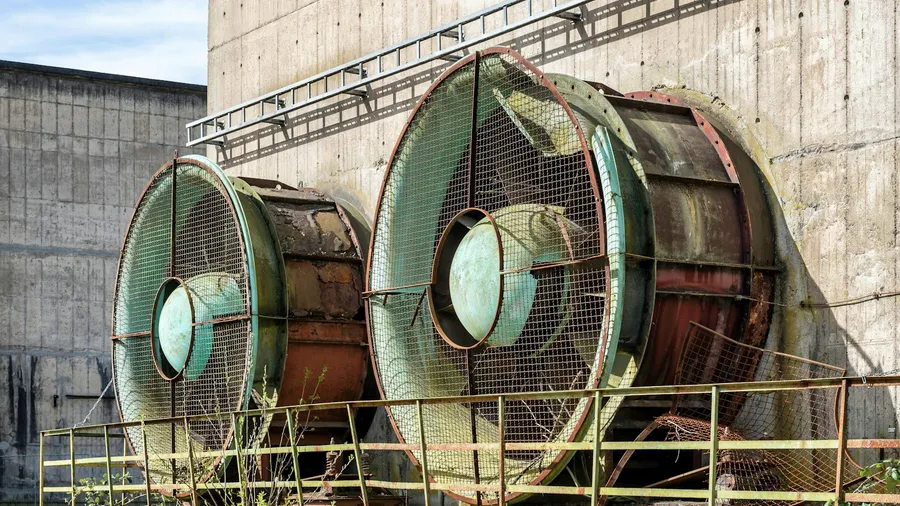
A commercial kitchen exhaust fan not pulling air is almost always caused by grease build-up choking the filters, plenum or duct, not a dead fan. Grease narrows the airway and forces the fan to move against rising resistance, so capture drops even while the motor runs. Less often the cause is a mechanical fault — a worn belt, seized bearing, tripped thermal overload or a fan wired to spin backwards. Clean the grease path first, because it is both the most common cause and the leading fire risk.
If smoke lingers over the cooktop, the kitchen runs hot, or the canopy no longer holds a tissue against its face, your extraction has lost airflow. This guide works through the causes in the order a technician checks them, from cheapest fix to most involved.
Why is my commercial exhaust fan not pulling air?
The single most common reason a commercial exhaust fan stops pulling air is grease accumulation across the filters, plenum and duct, which throttles the airway the fan draws through. As grease layers thicken, the free area shrinks, static pressure climbs, and the fan moves progressively less air even at full speed.
Grease is the culprit in most callouts because it never stops arriving — every fry, grill and wok burst sends grease-laden vapour into the system. Left uncleaned it hardens into a varnish that no amount of extra fan speed can overcome. It is also why airflow loss and fire risk are the same problem: grease is the leading ignition fuel in commercial kitchen fires, so the deposit starving your fan is also the deposit that burns.
What are the most common causes of lost extraction?
The causes fall into two groups: grease blockages that build gradually, and mechanical faults that fail suddenly. Knowing which group you are in tells you whether to book a clean or a mechanical repair.
| Cause | Symptom | Typical fix |
|---|---|---|
| Clogged filters | Smoke hangs at the cooktop, grease drips from the canopy | Soak-tank clean or replace filters |
| Grease-loaded duct | Whole system pulls weakly despite clean filters | Professional duct clean with access panels |
| Blocked or crushed ductwork | Sudden airflow loss, whistling at joints | Inspect and clear the run |
| Worn or slipping fan belt | Fan runs slow or noisy, airflow down | Replace belt, check tension |
| Seized bearing / motor fault | Grinding, hot motor, tripped overload | Mechanical service or motor swap |
| Fan spinning backwards | Fan runs but barely extracts after rewiring | Correct the phase rotation |
| Blocked roof cowl or discharge | Airflow drops with no interior cause | Clear cowl, birds’ nests, weather flaps |
Work down the table in order. Filters and duct account for the large majority of “no airflow” callouts, and both are grease problems you can plan against with routine cleaning.
How can I tell if it is a grease blockage or a fan fault?
Check whether the fan physically moves and sounds normal: a grease blockage leaves the fan running smoothly but extracting poorly, while a mechanical fault usually brings noise, heat or a fan that will not spin. This one observation splits the diagnosis in half.
If the fan hums along quietly yet smoke still pools, suspect grease — pull a filter and look for a hardened brown coating and a plenum you cannot see clean metal through. If instead you hear grinding, smell hot motor, trip a breaker, or the fan is silent, the fault is mechanical and needs a technician rather than a clean. A fan that runs but barely pulls straight after electrical work often has reversed rotation, which mimics a blockage exactly.
How does grease build-up reduce airflow over time?
Grease reduces airflow by coating every internal surface and shrinking the cross-section the fan draws through, so extraction falls steadily between cleans. A duct that has lost half its clear diameter to grease can lose a large share of its rated airflow, because airflow drops sharply as the airway narrows.
The decline is gradual, which is why kitchens miss it — staff adjust to the haze until capture is badly compromised. For the mechanism in detail, see how much airflow a dirty exhaust fan loses. A fan rated for your canopy will still fail to clear smoke if the path behind it is choked, and no fan upgrade fixes a blocked duct.
What Australian Standards apply to exhaust airflow and cleaning?
Two standards govern this: AS/NZS 1668.1 sets the mechanical ventilation design requirements — including the airflow rates a kitchen canopy must achieve — while AS 1851 sets the routine service intervals that keep the grease path clear enough to hit those rates. Together they define both the target and the upkeep.
AS/NZS 1668.1 matters because it fixes the extraction rate your system was built to deliver, so a fan not pulling air is failing a design benchmark, not just underperforming. AS 1851 matters because insurers and councils treat its service records as proof of compliance, and undocumented cleaning is treated as no cleaning after a fire. Regular service under AS 1851 keeps grease — the ignition fuel — from accumulating to the point it starves the fan.
How often should a commercial exhaust system be cleaned to keep airflow?
Most commercial kitchens should have the exhaust system cleaned every 3 to 6 months, while charcoal, wok and high-volume frying kitchens need monthly filter cleaning and quarterly duct cleaning. Frequency tracks grease output, because grease is what both blocks the airflow and feeds a fire.
| Kitchen type | Filter cleaning | Duct cleaning |
|---|---|---|
| Low grease (steam, reheat, café) | Every 3 months | Every 6–12 months |
| General restaurant or pub grill | Monthly to quarterly | Every 3–6 months |
| Charcoal, wok, high-volume frying | Monthly | Quarterly |
Staying on schedule keeps static pressure low so the fan pulls its rated air, and keeps grease loads below the threshold where a flare-up reaches the canopy. For a full breakdown, read how often to service a commercial exhaust fan.
What does it cost to restore airflow in Sydney?
Restoring airflow through cleaning starts from about $390 for a single-canopy service, runs $900–$2,500 for a combined canopy-and-duct clean, and $3,000+ for multi-storey riser systems. Cost scales with grease load and access, because a heavily loaded duct takes more labour and more access panels to clear back to bare metal.
A professional exhaust fan cleaning covers filters, plenum, duct and fan in one visit, and comes with before-and-after photos plus a compliance certificate for your AS 1851 records. If cleaning does not restore airflow, the same visit confirms a mechanical fault so you are not paying twice to find the cause.
Restore your extraction before it becomes a fire risk
If your fan runs but smoke will not clear, book a clean before the grease that is starving your airflow becomes the fuel for a canopy fire. Call 0468 070 392 or get a same-day quote, and we will diagnose the blockage or fault and get your extraction pulling to its rated airflow.